A Sustainable Solution for Food Waste Management: Composting-Based Foo…
페이지 정보

본문
Structural Challenges of Food Waste and the Need for Sustainable Solutions
Food waste is no longer a simple household inconvenience.
It has become a critical global issue impacting the environment, economy, and society as a whole.
A significant portion of food waste worldwide is disposed of through landfilling or incineration. During landfill decomposition, food waste generates methane (CH₄), a greenhouse gas with over 25 times the global warming potential of carbon dioxide (CO₂). This makes it a major contributor to climate change.
Additionally, leachate from food waste contaminates soil and groundwater, requiring further treatment that consumes additional energy and resources. The entire process of collection, transportation, and disposal also generates substantial carbon emissions and economic costs.
In response, global environmental policies are increasingly shifting away from centralized waste treatment systems toward decentralized, on-site processing solutions, which aim to reduce carbon emissions while enhancing resource efficiency.
Limitations of Conventional Food Waste Treatment Methods
Currently, the most widely used food waste treatment methods are drying systems and sink grinder (disposer) systems. However, both approaches have inherent limitations.
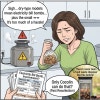
Drying systems reduce volume by removing moisture through high-temperature processes. This requires significant energy consumption, leading to increased electricity costs and indirect carbon emissions from power generation. Furthermore, odors and volatile organic compounds (VOCs) generated during drying can negatively affect indoor air quality. Continuous maintenance, such as activated carbon filter replacement, adds to operational costs. Importantly, the dried residue still requires disposal as food waste, meaning it does not provide a complete solution.
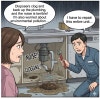
Sink grinder systems offer convenience by grinding food waste into small particles and discharging it into the sewage system. However, this places additional burdens on wastewater treatment infrastructure, contributes to water pollution, and may cause pipe blockages, backflow, and odor issues. As a result, these systems are regulated or restricted in certain regions.
Ultimately, these conventional methods do not truly “eliminate” food waste but rather transform or relocate it, failing to address the root of the problem.
.jpg?type=w466)
.jpg?type=w466)
Microbial Technology: A Natural and Sustainable Solution
To overcome these limitations, microbial-based biological decomposition technology has emerged as a sustainable alternative.
This method utilizes naturally occurring microorganisms to break down food waste and return it to the natural cycle. Instead of simply reducing waste, it enables resource conversion within a circular system.
Compared to conventional methods, microbial treatment requires less energy, produces no wastewater discharge, and transforms waste into reusable byproducts. This makes it one of the most environmentally sustainable solutions available today.
CoCoLin & COMPOD: Eco-Friendly Composting-Based Food Waste Systems
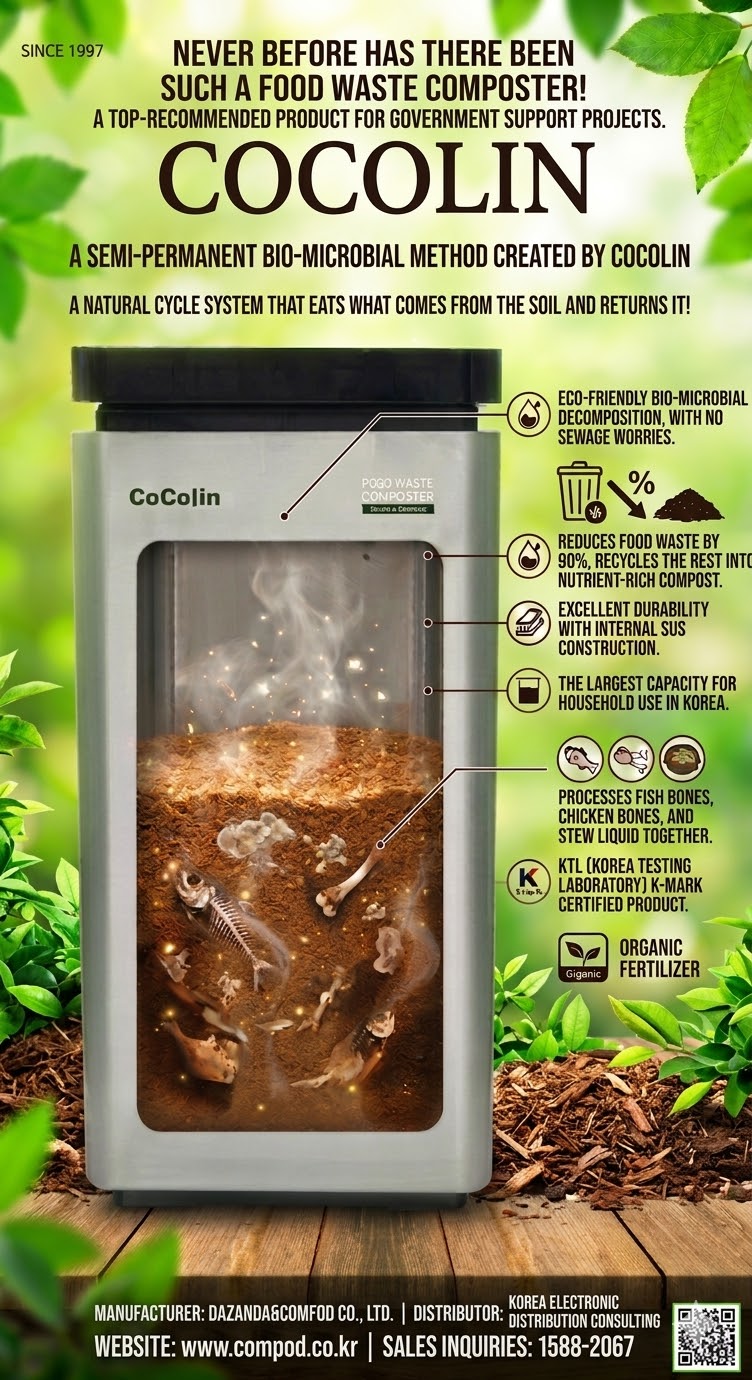
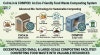
CoCoLin (household) and COMPOD (commercial/industrial) are advanced systems developed based on microbial technology, designed for eco-friendly food waste treatment and composting.
These systems decompose food waste through microbial activity, achieving up to 90% volume reduction, and convert the remaining residue into organic compost that can be reused as a valuable resource.
Therefore, CoCoLin and COMPOD are not merely waste processors, but rather
decentralized composting systems that transform food waste into resources.
.jpg?type=w966)
Technology Heritage Since 1997: The Legacy of OKLIN
The foundation of this technology dates back to 1997 in Korea,
originating from OKLIN, a pioneer in eco-friendly microbial food waste treatment.
CoCoLin and COMPOD inherit the technological expertise, operational know-how, and long-standing field experience of OKLIN. These products represent not a new concept, but an
- 이전글코코린 CoCoLIN LINE UP 26.03.23
- 다음글The Game Changer in Global Waste Management: Innovative "Source-Based" Solutions by DAJJANDA & COMPOD 26.03.14
댓글목록
등록된 댓글이 없습니다.
